
Trust minimum tax has passed Parliament: what it means for your firm
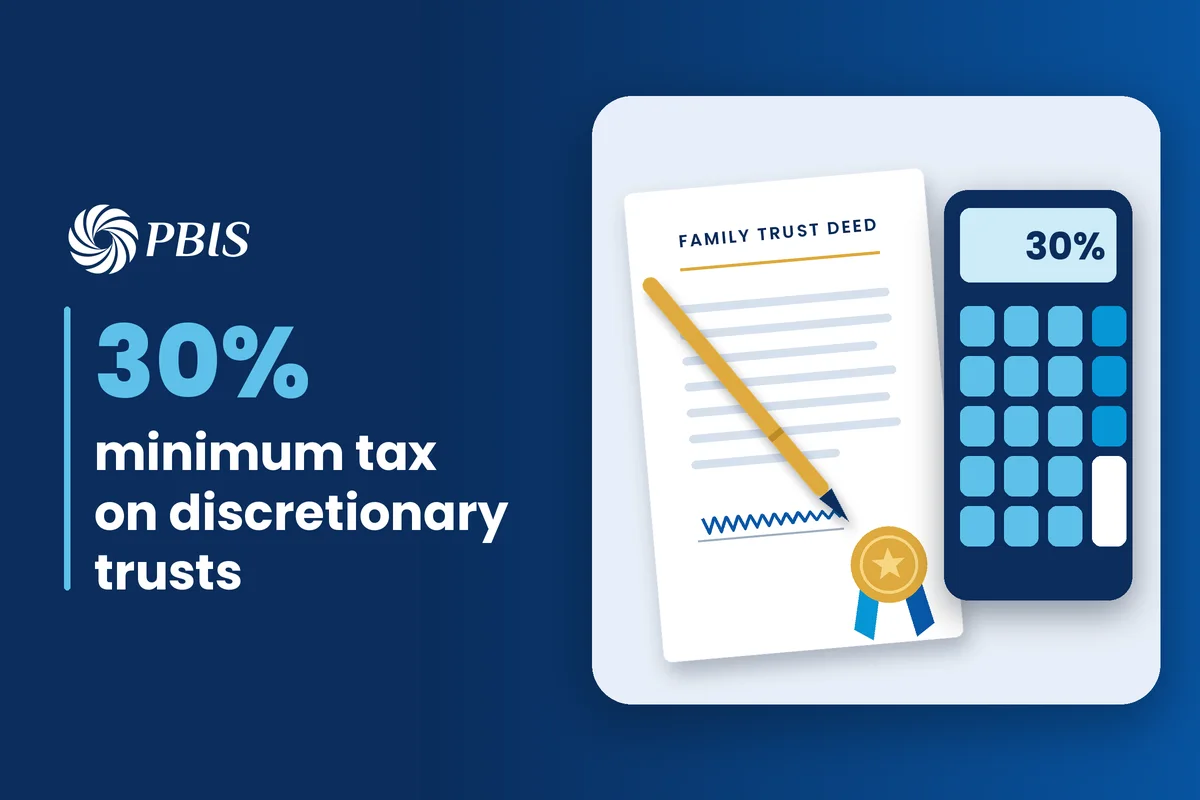
Parliament passed the 30% minimum tax on discretionary trusts on 26 November 2026. The bills now wait for Royal Assent. Trust clients will start asking their accountants what it means for them.
This post sets out, in general terms, what the law does and what it leaves out. It also looks at the extra work firms can expect.
What passed Parliament
Two bills passed both Houses:
- the Treasury Laws Amendment (Tax Reform No. 3) Bill 2026
- the Income Tax Rates Amendment (Minimum Tax on Discretionary Trusts) Bill 2026
The Senate passed both bills on 25 November, and amended the main bill with six Government amendments. The House of Representatives agreed to those amendments on 26 November.
The bills have passed Parliament. They are not law until they receive Royal Assent. The ATO’s page on the measure was last updated on 3 November 2026 and still describes it as not yet law.
One of the Senate amendments changes the exemption for genuine testamentary trusts. The Treasurer said people with existing wills will not need to redraft them just to qualify, as reported by Accounting Times.
What the minimum tax does
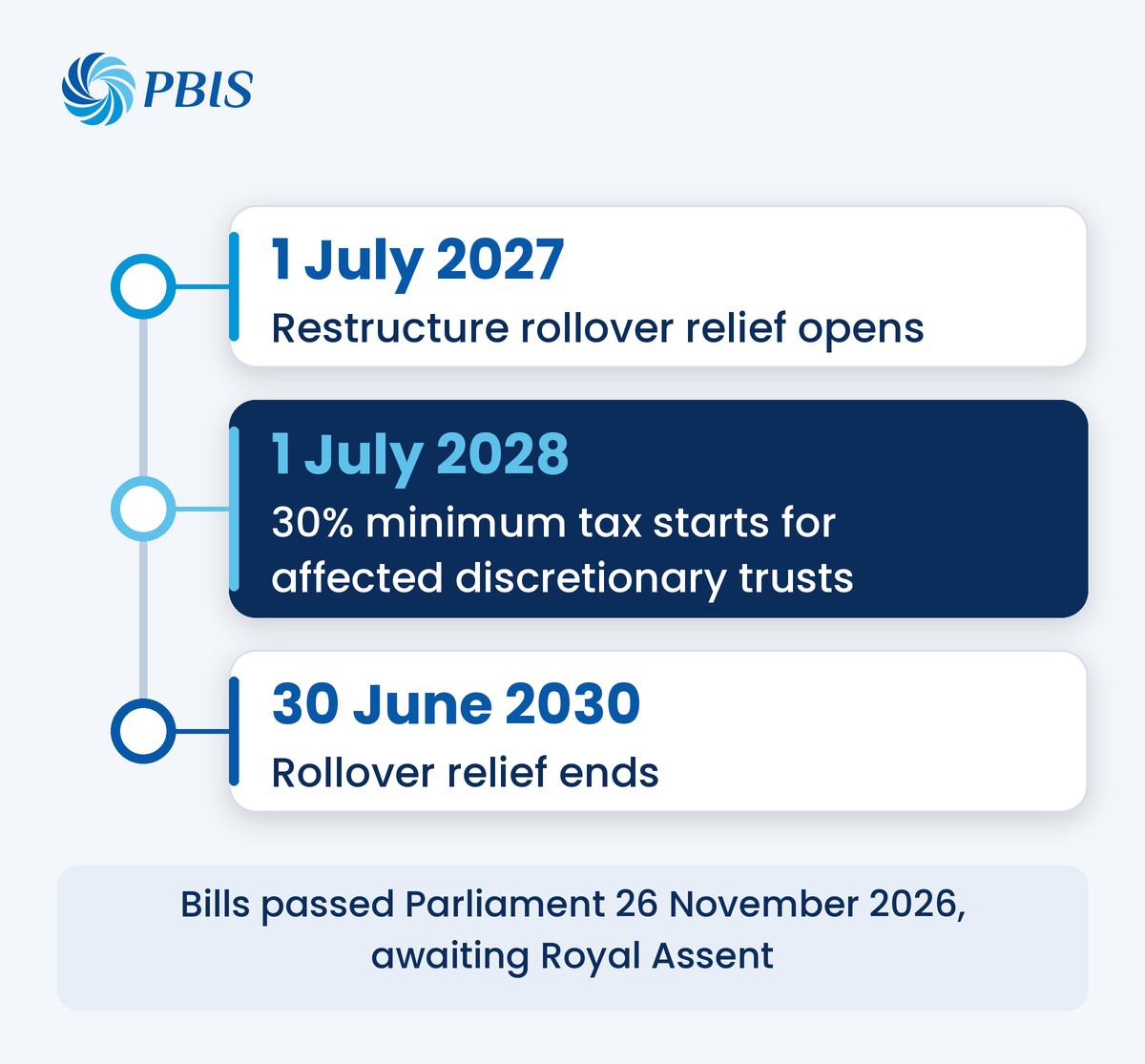
The tax applies to the trustee, not the beneficiary. It is a minimum rate of 30% on the net income of affected discretionary trusts, for income years starting on or after 1 July 2028.
It works as a top-up. If the trustee already pays tax on some of that income, the extra tax lifts the total to at least 30%.
Beneficiaries are treated differently, depending on who they are:
- A non-corporate beneficiary who is presently entitled to a share of the trust’s net income can claim a credit for the tax the trustee paid. The credit is non-refundable, so it can reduce the beneficiary’s tax but cannot produce a refund.
- A company beneficiary does not get the credit, even though the company may also be taxed on the distribution, according to HLB Mann Judd.
The options the law sets out
The Treasurer has described three options for businesses that use trusts: stay in the same structure and pay the minimum tax, elect into a fixed distribution regime, or restructure into a company or fixed trust.
- Restructure rollover. A time-limited rollover covers transfers of assets out of discretionary trusts to entities that are not discretionary trusts. It runs for three years, between 1 July 2027 and 30 June 2030.
- Fixed distribution election. An eligible discretionary trust that exists at 1 July 2028 can elect to make fixed distributions to pre-nominated beneficiaries. If it does, the minimum tax does not apply. HLB Mann Judd notes the trade-off is less flexibility.
- Stay as is. The trust keeps its structure and pays the minimum tax where it applies.
Which option suits a given trust depends on its facts. That is a question for the client’s adviser.
What the minimum tax does not cover
The tax does not apply to every trust, and it does not apply to every type of income. Exclusions include:
- fixed trusts
- complying super funds, including self-managed super funds
- the estates of deceased persons
- income of genuine testamentary trusts
- primary production income
Each exclusion has conditions. The explanatory memorandum lists further exclusions, and the Senate amendments changed the testamentary trust rules. Whether an exclusion applies depends on the trust and its income.
What it means for firm workloads
Chartered Accountants ANZ says at least 350,000 small businesses now face complexity and uncertainty. It says businesses that use discretionary trusts will need to assess whether their arrangements remain appropriate before 1 July 2028. It adds that this could mean significant restructuring costs, additional professional advice and increased compliance obligations.
The Treasurer has said more than 90 per cent of small businesses will not be affected. Both views are on the record, and firms will see the effect client by client.
Business groups are still raising stamp duty on restructures. Accounting Times reports that the Council of Small Business Organisations of Australia says most states have not guaranteed duty-free treatment.
For an accounting firm, that points to a busy period for partners. Clients will want to talk through their options. That time is best spent on the advice.
A lot of the surrounding work is preparation. Trust returns, workpapers, resolutions and records all still need preparing. Firms that are already at capacity may want help with that part.
How PBIS can help
PBIS prepares tax and accounting work for Australian accounting firms. That includes trust returns, workpapers, tax planning workings and trust resolutions.
See the tax and accounting service page for what PBIS prepares and how a job moves.
Talk to PBIS
If your team is at capacity, tell us what work you want to hand over. We reply within 24 hours on business days.
Contact PBIS or email growth@pbis.co.
Sources
- Chartered Accountants ANZ: Trust tax reforms pass, leaving 350,000 small businesses to review their arrangements, 26 November 2026. https://newshub.medianet.com.au/2026/11/trust-tax-reforms-pass-leaving-350000-small-businesses-to-review-their-arrangements/184160/
- Parliament of Australia, ParlInfo: Treasury Laws Amendment (Tax Reform No. 3) Bill 2026. https://parlinfo.aph.gov.au/parlInfo/search/display/display.w3p;page=0;query=BillId%3Ar7554%20Recstruct%3Abillhome
- Parliament of Australia, ParlInfo: Explanatory memorandum, Treasury Laws Amendment (Tax Reform No. 3) Bill 2026. https://parlinfo.aph.gov.au/parlInfo/search/display/display.w3p;query=Id%3A%22legislation%2Fems%2Fr7554_ems_5ddf5ef5-1ba9-465d-8a20-6eedde8537f6%22;rec=0
- ATO: Tax reform, introducing a minimum tax on discretionary trusts (last updated 3 November 2026). https://www.ato.gov.au/about-ato/new-legislation/in-detail/businesses/tax-reform-introducing-a-minimum-tax-on-discretionary-trusts
- HLB Mann Judd: Family trusts after the Budget, 26 November 2026. https://hlb.com.au/family-trust-after-budget-what-should-families-do-now/
- Accounting Times: Stamp duty woes remain as ‘toxic’ trust tax laws pass both houses, 26 November 2026. https://www.accountingtimes.com.au/profession/stamp-duty-woes-remain-as-toxic-trust-tax-laws-pass-both-houses
General information only. This post is not tax, financial or legal advice and does not take account of anyone’s circumstances. It reflects the bills as passed by Parliament on 26 November 2026, before Royal Assent. The law and ATO guidance may change.
General information only — not tax, financial, superannuation, or legal advice, and not a recommendation to act. It may be out of date. Check the credited source and get advice from a qualified professional about your own circumstances.